7 Fitness Tracker Mistakes That Keep You Feeling Like You Are Falling Behind
jasmine Fowler

You bought the watch, the ring, or the app with real hope. For a week you felt a spark of momentum: steps, rings, streaks, a little graph that made you feel like you were finally getting somewhere. Then the numbers started talking back. A red ring at 11:58 PM. A calorie target you blew past at lunch. A "readiness" score in the 40s when you felt fine. A Tuesday you remember as active that the app insists was sedentary.
So now the tracker sits in a drawer, or you wear it like a judge on your wrist. The honest problem is not your discipline. It is that most fitness tracker mistakes for beginners come from expecting a tool built for measuring to act as a tool for motivating. Those are two different jobs, and only one of them helps you build confidence.
I coach young adults through habits, not hype. Over and over I see capable people decide they are "bad at consistency" because a device told them so. That is a measurement error, not a character flaw. Here are the seven mistakes I see most often, with a fix you can try this week.
Mistake 1: Letting the tracker set a goal you never agreed to
Open your app and find the daily step goal. Did you choose that number, or did the app offer a default and you tapped yes? Most people tap yes. Then, quietly, a circular progress bar becomes the definition of a good day.
This is the fastest way to borrow someone else's standard. The number is not wrong, exactly. It is just not yours.
Try this instead
- Write down your current average daily steps for the last two weeks, not your best day. The number under "average" is your real starting point.
- Set your goal 1,000 to 1,500 steps above that average. Not above your best day. Above the ordinary. A goal you hit five or six days out of seven builds far more confidence than a goal you hit twice and feel bad about five times.
- Write one sentence on a sticky note above your charger: "I chose ___ steps because ___." The reason matters. "Because I want to feel less wrecked on my walk home" is a reason. "Because it felt round" is not.
Example: A client tells me her average is 5,200 steps. She wants to set 10,000. We set 6,500 for three weeks. She hit it on six days in the first week, which did more for her confidence than the old 10,000 goal had done in six months.
Mistake 2: Treating a calorie burn number as arithmetic
A 45 minute gym session reading "720 calories" is not a receipt. It is an estimate, usually a fairly generous one, and it changes with your body weight, the device, and what you had for breakfast. None of that is a reason to throw the tracker out. It is a reason to stop doing math with it.
Where this goes wrong is the mental trade: I earned this, so I can eat that. That loop can quietly turn movement into a transaction and food into a currency. If that pattern shows up for you, that is worth paying attention to, and it is a good thing to name in coaching rather than solve alone.
Try this instead
Use the burn number as a trend, not a total. Look at it once a week. If your weekly burn is climbing because you are moving more consistently, that is useful information. The individual number for today is not a permission slip and not a debt.
- Check it weekly, not hourly
- Ignore the "calories earned" feature if it makes you bargain
- Judge a session by how it felt and whether it happened, not by the count
Mistake 3: Chasing streaks that punish you for having a life
Streaks are the most seductive feature in the whole app. They are also the most fragile. A 40 day streak does not build a habit. It builds a fear of Wednesdays, because one rough Wednesday wipes out 40 days of evidence about who you are.
I have watched people walk laps in their living room at midnight for a streak. That is not consistency. That is a hostage negotiation.

Try this instead
Borrow the habit practice of a floor you cannot fall below. Instead of "every day or nothing," choose a minimum that survives a bad day: five minutes of movement, one walk to the bus, ten squats before your shower. Then count weeks with at least four floors met instead of days in a row.
The point of a habit is that it still works on your worst Tuesday. If your tracker goal only survives your perfect days, you built a test, not a habit.
For the record: since this is about my coaching practice, here is how I do it. We set a floor you would be willing to do when you are tired and slightly annoyed. Then we track the floor, not the ceiling. The ceiling is a bonus. The floor is the identity.
Mistake 4: Tracking three things badly instead of one thing well
Sleep, steps, water, calories, heart rate variability, workouts, mood, screen time. That is a lot of dashboards. When everything is measured, nothing is meaningful, and the app becomes a report card you avoid opening.
Here is a comparison of what each metric is actually good for, so you can pick with intention rather than guilt.
| What you track | What it genuinely tells you | Where it misleads | Use it if |
|---|---|---|---|
| Steps | Whether you moved across the day, not just in one session | Overcounts wrist movement, misses cycling and swimming | You sit a lot and want more daily movement |
| Sleep duration and consistency | Whether your bedtime is steady | Bedtime in bed is not time asleep | You feel tired but are not sure why |
| Workout sessions logged | That you showed up | Says nothing about quality or effort | Showing up is your current struggle |
| Calories burned | Very rough weekly movement trend | Too imprecise for daily trade offs | You use it weekly and never as a permission slip |
| Readiness or recovery score | A nudge to check in with your body | Cannot feel your soreness, stress, or exam week | You treat it as a question, not a verdict |
Try this instead
Pick one metric for the next three weeks. The one that matches the outcome you care about most right now. Sleeping better? Track bedtime consistency. Feeling sluggish at 3 PM? Track steps and water. Trying to get to the gym at all? Track sessions logged, nothing else. You can turn the rest off in settings. Yes, actually off.
Mistake 5: Comparing yourself to a dataset you cannot see
A fitness tracker mistake that gets overlooked: the app's social feed. You see a stranger's 14,000 step day and a friend's 5 AM run. You do not see their schedule, their training history, their chronic illness, or the nap they took after. Comparison with people whose context is invisible is a way to lose to nobody.
There is a special version of this that hits 20 somethings hard: comparing your first month of working out to someone's fifth year, or your entry level schedule to someone who works from home. Different inputs, different outputs.
Try this instead
- Turn off the social feed and any challenge notifications for two weeks. Notice how much mental chatter goes with it.
- Follow one or two people whose habits you actually want to learn from, not the people whose highlight reels make you feel behind.
- Compare today to your own four week average. That is the only dataset you have full access to.
Mistake 6: Chasing more sleep when you actually need a steadier bedtime
Sleep tracking can be genuinely useful and also genuinely cruel. People wake up, look at a "poor sleep" score, and start the day convinced they are wrecked before their feet hit the floor. That is a mindset problem handed to you by an algorithm.
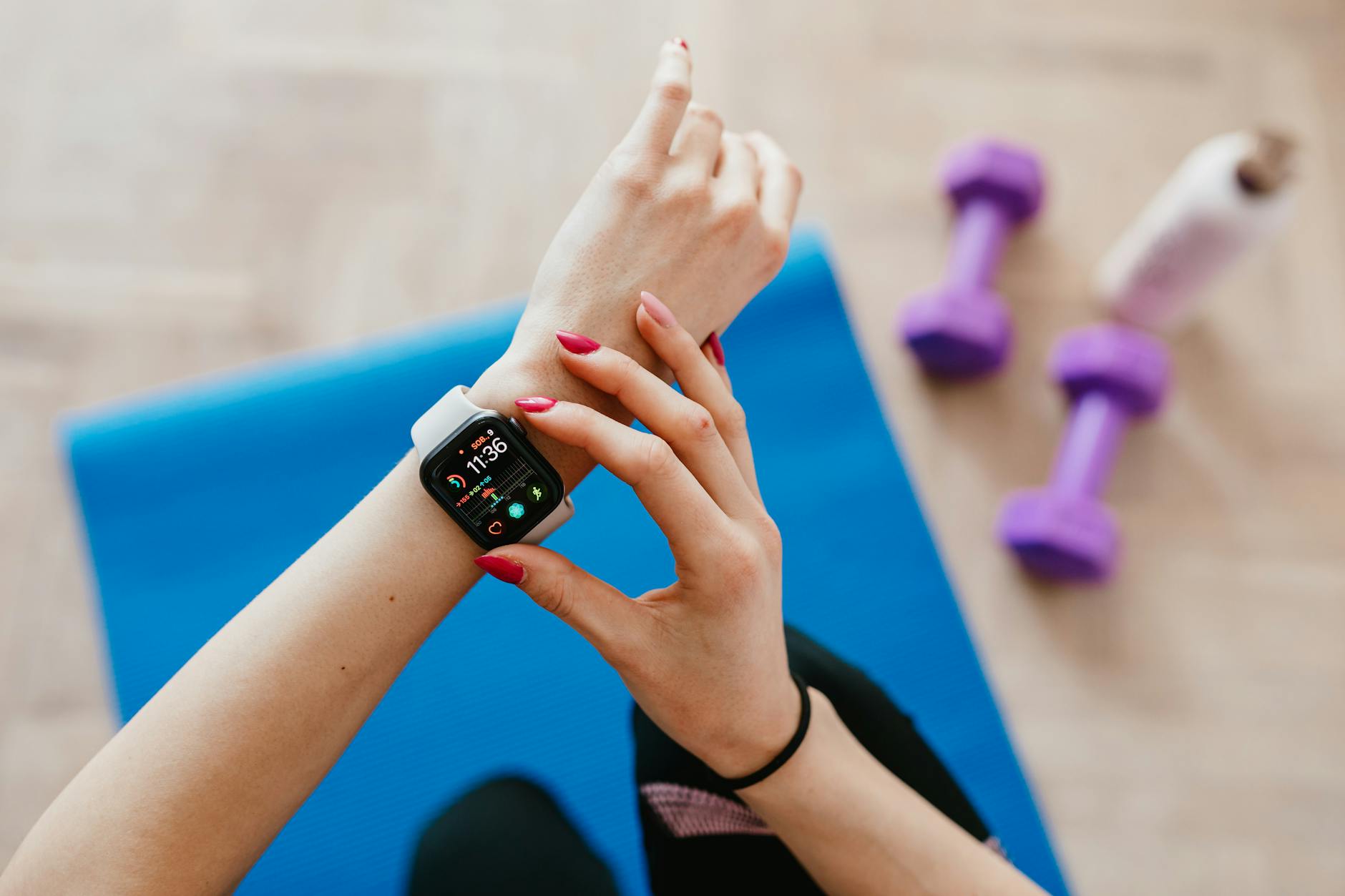
The more useful signal is usually consistency. Same wake time most days. Wind down starting around the same hour. That single change tends to do more for how you feel than an extra 30 minutes on a Saturday, and you can see it in the app over a few weeks.
Try this instead
For the next two weeks, watch two numbers only: your average bedtime and the spread between your earliest and latest bedtime. If that spread is more than about 90 minutes, your first experiment is not more sleep. It is a narrower bedtime window. Pick a wind down cue that happens in the real world, like a specific show ending or your phone going on the charger across the room.
And if a low readiness score makes you want to skip a workout you were genuinely looking forward to, ask your body, not the app. Tired but willing is different from sore and flat. You can tell the difference. The algorithm cannot.
Mistake 7: Using the tracker as evidence against yourself
This is the big one, and it ties every other mistake together. If your first move every morning is to check a number and decide whether you are doing well, the tracker is not helping you build confidence. It is grading you before breakfast.
Numbers are information. They are not a verdict on your worth or your potential. A week of lower steps during exam season is not proof you lack discipline. It is proof you had exams.
Try this instead
Move the data check to a weekly review of 10 to 15 minutes. Put it in your calendar so it is a task, not a reflex. Answer three questions:
- What worked? Name one thing the week gave you, even small. "I walked to class instead of taking the bus twice."
- What got in the way? Be specific and kind. "Late shifts on Thursday and Friday" is more useful than "I was lazy."
- What is one small change for next week? One. Not a full system rebuild.
Example: A client's review showed a pattern I would not have spotted from the daily numbers. His steps collapsed every Sunday and Monday, which turned out to be the days after his late shift at work. The fix was not extra willpower. It was a 10 minute walk before his shift on those days only. Small, targeted, and it stuck.
A 20 minute reset you can do today
If you want to keep the tracker but stop the noise, here is the whole thing in one sitting. Set a timer.
- Minutes 1 to 5: Turn off notifications, the social feed, and any metric you are not actively using. Yes, the calorie feature too, if it makes you bargain.
- Minutes 5 to 10: Find your two week average for your chosen metric and set a goal only slightly above the ordinary. Write your reason down.
- Minutes 10 to 15: Set a floor for your bad days. Something you would do tired. Write it where you will see it.
- Minutes 15 to 20: Put a weekly review in your calendar and set the reminder for the same time each week.
That is it. You are not overhauling your life. You are turning a measuring device into a habit device, which is the only job that matters for how you feel about yourself.
What confidence actually looks like with a tracker
Confidence is not a high score. It is knowing what you will do on a normal day, and knowing what you will do when the normal day falls apart. A habit based system gives you both, because the floor is written down and the review catches what the daily graph hides.
If you want help building that, this is exactly the work I do in one to one coaching. We start with the outcome you actually care about, whether that is steadier energy, less dread around food and movement, or a version of consistency that survives your real schedule. Then we build the smallest version of it, track what matters, and adjust weekly. No ring closing required.
Start with one number and one floor. If you can keep that for three weeks, you have learned more about yourself than any readiness score will ever tell you.


